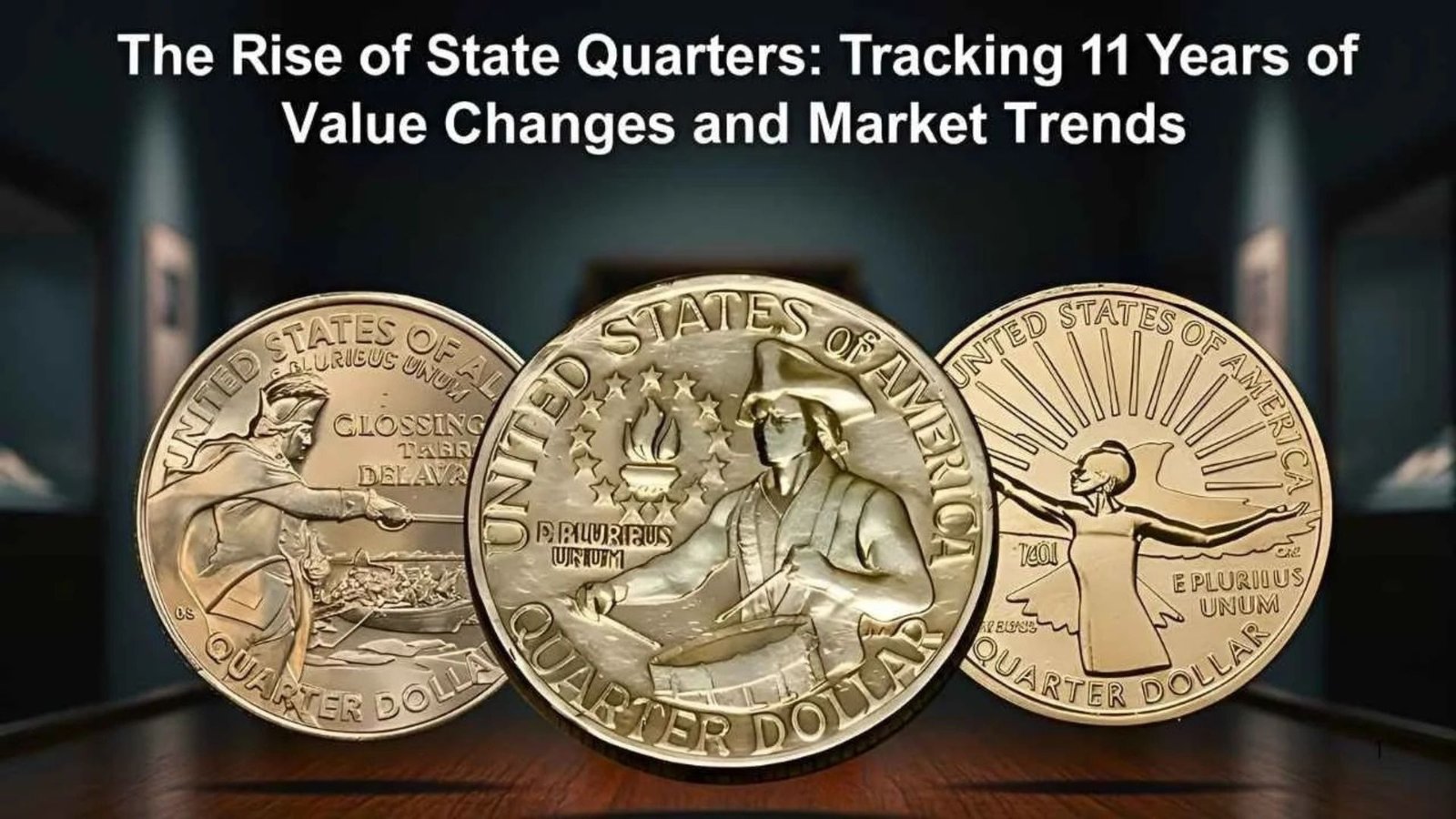
Imagine digging through an old coin jar and unearthing a shiny 1999 Delaware quarter—once pocket change, now a nostalgic gem fetching dollars from eager collectors. The State Quarters rise kicked off in 1999 when the U.S. Mint launched its 50 State Quarters Program, transforming everyday currency into a cultural phenomenon that hooked over 140 million Americans. Spanning 11 years State Quarters trends from 1999 to 2009—including the 2009 D.C. and territories extensions—this initiative released unique designs for all 50 states plus six more, celebrating history, landmarks, and pride. Today, in 2025, State Quarters collector value 2025 is surging again, driven by nostalgia, online marketplaces, and savvy investors spotting premiums in errors and high grades. Whether you’re a newbie hunter or seasoned numismatist, understanding these shifts unlocks real potential in your spare change.
What Sparked the State Quarters Boom?
The program wasn’t just coins—it was a masterstroke of public engagement, authorized by Congress in 1997 to boost Mint revenue and heritage awareness. Five designs dropped annually in ratification order, from Delaware’s Caesarea to Hawaii’s Kamehameha, blending artistry with accessibility that made collecting feel like a family quest. By 2008’s finale, over 34 billion quarters circulated, generating $3 billion in seigniorage as folks hoarded them en masse. Popularity exploded through TV ads, Kermit the Frog tie-ins, and uncirculated rolls sold for premiums—1999 clad sets flew off shelves at 4.6 times silver versions. This State Quarters program history revived numismatics for millennials and boomers alike, turning quarters into conversation starters and starter sets.
Key Market Trends Over 11 Years
From 1999’s feverish launches to 2009’s wrap-up, State Quarters market analysis reveals a rollercoaster of hype and stabilization. Early years (1999-2001) rode nostalgia waves, with Delaware and Pennsylvania quarters appreciating fastest post-2008 as “firsts” gained icon status—uncirculated examples jumping from $1 to $5 by 2010. Mid-series (2002-2005) saw scarcity spikes in lower-mintage issues like Oklahoma, while errors like Wisconsin’s Extra Leaf emerged as stars, values climbing 300% in a decade. By 2025, digital forums and grading booms (PCGS/NGC) have fueled a 20-50% uplift in high-grade clad strikes, with silver proofs leading at 150% growth since 2015 amid bullion rallies. Overall, while circulated coins hold face value, collector demand has shifted toward authenticated rarities, mirroring broader modern coin resurgence.
Value Comparison: 2015 vs. 2025
| Coin Variety | 2015 Avg. Value | 2025 Avg. Value | Trend Notes |
|---|---|---|---|
| 1999 Delaware MS65 Clad | $2 | $5 | Nostalgia-driven steady rise |
| 2004 Wisconsin Extra Leaf | $100 | $400 | Error hype via social media |
| 2005 Minnesota Doubled Die | $20 | $75 | Rediscovery in rolls |
| 2008 Hawaii Silver Proof PR69 | $15 | $35 | Silver price + low mintage |
| Full 50-State Clad Set | $50 | $100 | Set completion demand |
Factors Driving Collector Value in 2025
Condition reigns supreme in rare State Quarters prices—MS65+ graded coins command 10x premiums over circulated ones, thanks to fewer pristine survivors after decades in pockets. Errors like the 1999-P “Spitting Horse” or wrong-planchet strikes have skyrocketed, hitting $10,000+ at auctions due to their “story” appeal. Silver proofs from San Francisco (90% silver) benefit doubly from metal spot prices and limited runs, with sets now at $250-400 versus $100 in 2015. Broader State Quarters investment 2025 trends? Online sales via eBay and Reddit communities have democratized access, spiking demand for low-mintage finals like Hawaii ($5-15 proofs), while inflation and millennial nostalgia keep the market humming at 5-10% annual growth.
Top Valuable State Quarters to Hunt
Focus on these standouts for quick wins in your change jar. The 2004-D Wisconsin Extra Leaf (high/low varieties) dazzles with its corn-ear anomaly, values soaring to $300-5,000 in gem condition—perfect for error chasers. Hunt 2005-P Minnesota’s doubled-die trees, a subtle beauty worth $5-100, rediscovered in family albums. Early birds like 1999 Connecticut’s Charter Oak errors fetch $50+ for rim raises, blending history with rarity. Silver 2008-S Oklahoma proofs gleam at $749 in PR69, a finale favorite for set builders. Don’t sleep on experimental yellow-green clad like Pennsylvania’s $9,800 MS67 stunner—ultra-rare planchet quirks for advanced hunters.
Why State Quarters Endure as Investments
Beyond bucks, these quarters symbolize Americana—state pride in your palm, a hedge against inflation with silver variants yielding 8-12% returns since 2014. As Gen Z enters via TikTok hunts, supply tightens for high-grades, promising 10-20% appreciation by 2030 per experts. They’re accessible entry points to numismatics, outperforming stamps or comics in liquidity, with full sets now flipping for $75-200 on well-preserved albums. In a digital age, their tactile history keeps the spark alive.
FAQs – State Quarters Trends 2025
- What caused the initial State Quarters rise? The 1999 launch tapped patriotism and easy collecting, drawing 147 million participants with phased releases.
- Are most State Quarters collector value 2025 still face value? Yes—circulated strikes hover at 25 cents, but errors and proofs premium up to thousands.
- Which 11 years State Quarters trends show biggest gains? Early 1999-2001 issues via nostalgia; mid-series errors like Wisconsin up 300% since 2015.
- How do I spot rare State Quarters prices in change? Check for doubled dies, extra leaves, or off-center strikes—use apps or forums for verification.
- Is State Quarters investment 2025 worthwhile? For long-term, yes—silver proofs and graded sets yield steady 5-10% growth amid rising demand.
Conclusion
The State Quarters rise from 1999’s buzz to 2025’s savvy market proves modern coins can evolve into enduring treasures, blending history with hidden profits. As 11 years State Quarters trends highlight, from error jackpots to silver steadiness, opportunities abound for hunters and investors alike. Dust off that jar, grade what shines, and join the legacy—your next find might just rewrite your wallet’s story. Dive into NGC/PCGS for appraisals and keep collecting; the quarter century mark awaits more rises.